№ 01: Premise
Premise

Product strategy consulting for CPOs adapting to AI-shaped user behaviour.

We write product strategies for established product functions adapting to AI-era user expectations, shifting value perception, and collapsing feature differentiation.

Our clients use them to clarify positioning, rethink pricing, prioritise roadmap decisions, and align stakeholders on direction.

Audience
CPOs, VPs, and heads of product at established companies (typically $10M+ revenue)
Format
Defined-scope project · 4–10 weeks · Founder-led
Location
Remote globally · In-person available in London, UK
Clients
BairesDevToptalGridscaleBetterEngineer & more
№ 02: Audience
02: Audience

This is for CPOs whose product strategy still assumes the pre-AI market.

Your roadmap was built on assumptions that no longer hold: what users value, what differentiation looks like, and where durable product advantage now comes from.

Shift 01

Capability is no longer a moat.

AI dramatically lowers the cost of building features, interfaces, workflows, and automation. Users are increasingly comparing products on speed-to-value, workflow integration, trust, and outcome reliability.

The strategic question is shifting from “What can we build?” to “What remains defensible once everyone can build it?”

Shift 02

The operating model has changed.

AI compresses execution across research, design, engineering, and support. Smaller teams can now operate at disproportionate scale, but only if decision-making, incentives, and workflows evolve with them.

The bottleneck is increasingly strategic clarity, not production capacity.

Shift 03

Product differentiation is collapsing.

AI-native challengers are resetting expectations around UX, onboarding speed, pricing, and perceived intelligence. Meanwhile, many incumbents are layering AI onto products, teams, and pricing models designed for a different market. The strategic shift is not adding AI features; it is redesigning the product around AI-era behaviour.

№ 03: Headwinds
03: Headwinds
AI-native companies now capture 63% of new category spend, up from 36% in 2024.

Source Menlo Ventures

01

AI-native products increasingly monetise outcomes. Many incumbents still monetise access.

02

Renewal pressure is shifting from feature breadth to workflow ROI.

03

Product adoption is increasingly bypassing enterprise buying cycles.

The category is reorganising beneath you. If your pricing model, roadmap, and go-to-market motion still assume pre-AI buying and adoption behaviour, product-market fit decay becomes inevitable.

№ 04: Synthesis
04: Synthesis

We write your product strategy and roadmap.

A high-leverage product strategy document should be one page or less, plain text. The supporting research, portfolio analysis, pricing benchmarks, and operating-model recommendations are what we synthesise into that page. This is what the artefacts of an engagement might typically contain.

Inputs
Market & category
  • Competitor portfolio teardown
  • Category white-space mapping
  • Pricing model benchmarks
  • ICP segmentation
Customer research
  • Customer & churn interviews
  • Jobs-to-be-done synthesis
  • Customer journey mapping
  • Sales-cycle obstacle review
Product analytics
  • Funnel analysis
  • Feature engagement analysis
  • Behavioural segmentation
  • Metrics ecosystem review
Internal assessment
  • Stakeholder interviews
  • Roadmap teardown
  • Operating-model interviews
  • Team capability mapping
Synthesis
Product Strategy (1-pager)
Outputs
  • Multi-cycle roadmap
  • Portfolio calls (build/hold/kill)
  • Investment Thesis
  • Operating-model recommendation
  • Board briefing pack
№ 05: Proof
05: Proof

Some of the product leaders we've worked with.

As part of a successful startup, I moved into my first C-level position relatively quickly.

Jayson was easily able to understand our business and break down my challenges in ways which helped me to solve them much more quickly and creatively than could have doing it alone.

Marc Harriss · CPO @ Gridscale, Acquired 2023
  1. i. Gridscale
  2. ii. BairesDev
  3. iii. Toptal
  4. iv. Grandpad
  5. v. BetterEngineer
№ 06: Strategist
06: Strategist

About your strategist.

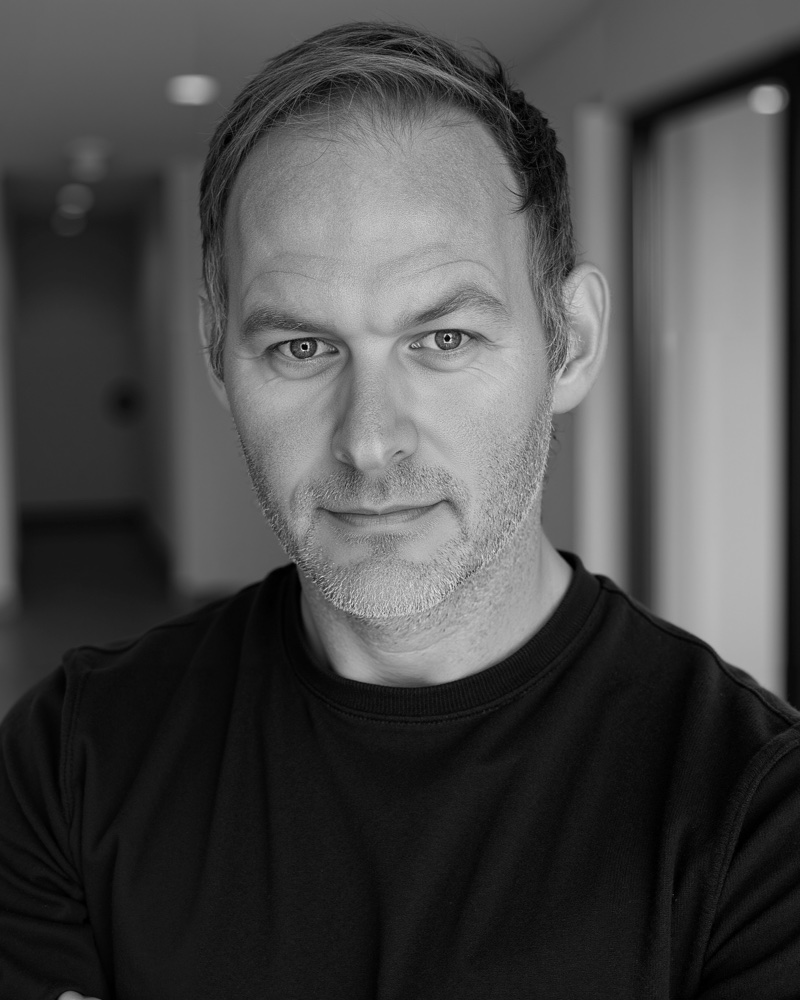
Jayson Robinson is the founder of Polyviam and runs all consulting engagements personally. Over the last decade he has led growth and marketing strategy for B2B companies including BairesDev and Toptal — both US unicorns — alongside building his own businesses. He has designed and executed marketing strategies that have collectively driven over $120M in incremental annual revenue for clients.

Alongside operator work, he coaches and teaches. He has taught or coached over 500 product managers, marketers, execs, and founders from organisations like Spotify, Accenture, LEGO Group, and the UK Home Office (plus hundreds of lesser-known organisations).

Based in London, working with operators across the UK, US, and Europe.

More on the about page.
№ 07: Questions
07: Questions

Common questions about product strategy consulting.

Who is this product strategy consulting for?

CPOs, VPs of product, and heads of product at established B2B companies — mid-market and up. This typically means $10M+ revenue or 100+ employees as a floor. The work assumes you lead a product organisation, own a roadmap, and ultimately have strategic accountability to execs or the board. In plain terms, it is B2B product strategy consulting for senior product leaders. It is not designed for individual contributor PMs, founder-PMs at pre-PMF startups, or product managers looking for craft-level coaching. See our coaching pages for that.

Do you work with B2C or public sector organisations, or only B2B product teams?

We have worked with B2C companies and public sector organisations, and we still take on that work when the problem fits. But Polyviam is primarily a B2B practice: most of our experience, pattern recognition, and positioning is with established B2B companies. The underlying work is still rigorous research and strategic judgement, but we focus our energy where our context is deepest.

How is this different from product management coaching?

Coaching is you and your team doing the work, with us in the room once per week/fortnight to push thinking and hold accountability. Consulting is us producing a written product strategy with the leader and team as collaborators, then handing the artefact over. Coaching is the right format when judgement needs to stay with you and compound in the team. Consulting is the right format when there is a decision that cannot wait six months — a repricing, an AI-native rebuild, a portfolio cut, a category reposition. See product management coaching for the coaching engagement.

What is the final deliverable for a product strategy consulting engagement?

Our end-target is a one-page product strategy document, plain text. Named strategic pillars, named exclusions, the AI-native vs AI-enabled call, the build/hold/kill portfolio cuts, and the operating-model change. That one page is backed up by a multi-cycle roadmap and the supporting analysis — customer research synthesis, portfolio teardown, pricing benchmarks, build-vs-prompt rubric — plus a board briefing pack. To put it simply: huge amounts of work synthesised into a short, high-leverage document.

How long does the engagement take?

A simple project may be 2 weeks; complex portfolios or multi-product lines push toward 12 or more. Specific timelines depend primarily on product org complexity, the stakes, and stakeholder availability.

How much does product strategy consulting cost?

Engagements are most often on a time-and-materials basis. We discuss costs on the intro call, but minimum engagement size is $5,000.

How is this different from other product strategy consultants, SVPG, Reforge, or fractional-CPO firms?

Most product strategy consultants sell one of three things: methodology, courses, or temporary product leadership. SVPG is useful for moving a team into Cagan's empowered-team model; Reforge is useful for learning; fractional-CPO firms help cover leadership capacity. Polyviam is closer to agency-delivered product strategy consulting: a board-ready written strategy with named bets, exclusions, portfolio calls, and roadmap implications.

Do you recommend specific AI tools or vendors?

Not as generalised recommendations. Only if required in the engagement, and only fitting the situation of the team. We aren't tied to any vendor.

Do you work with early-stage or pre-PMF product teams?

No. Polyviam works at mid-market scale and upwards. Pre-PMF product strategy is mostly fiction; you should be running cheap experiments and writing memos to yourself, not commissioning external strategy. SVPG, ProductLed, Lenny's network, and a long list of seed-stage advisors are better-fit than we are.

№ 08: More
№ 09: Begin
09: Begin

Start with a 30-minute intro call.

A diagnosis-themed conversation. We'll ask lots of questions and by the end have a clear picture of the type of engagement you need.