№ 01: Premise
Premise

Product management coaching for the AI‑era CPO.

Hands-on coaching for CPOs, VPs of product, and directors of product at established B2B companies working out where AI fits in discovery, delivery, the roadmap, and the team.

Audience
CPOs, VPs, and directors of product at established B2B companies (mid-market and up; $10M+ revenue or 100+ employees as a floor)
Format
1:1 coaching · 3+ month engagement · 2/4 times per month
Location
Remote globally · in-person available in London, UK
Coach
Jayson Robinson · ex-Toptal, BairesDev
Clients
GridscaleGrandpadBetterEngineerCloudtask & more
№ 02: Audience
02: Audience

Who this product management coaching is built for.

Three patterns we see in the product leaders we coach. If one of them sounds like a question you keep returning to without a clean answer, the work will fit.

Pattern 01

AI-enabled, not AI-native.

You shipped AI to make every step faster — writing, drafting, summarising, generating. Customer task-completion time dropped. But the outcome customers actually pay for didn't shift, because the unit of value is still a human plus an assistant. The hard pivot is rebuilding the product so AI delivers the outcome itself, not the task. That changes positioning, pricing, and what you're really selling.
Pattern 02

The product trio is breaking.

The PM/designer/engineer trio rested on three distinct crafts. AI compressed all three: PMs can mockup with v0. Designers build prorotypes with Claude Code. Engineers can synthesise user feedback with Perplexity. The overlap will only get more pronounced, but the org chart, rituals, and career ladder still assume the old trio. The work is rebuilding the operating model around what these seats do.

Pattern 03

Shipping fast, pricing slow.

Every quarter, three more AI items hit the roadmap. None move retention, ARPU, or sales cycle length. Meanwhile, your per-seat pricing is decaying because power users want to pay for outcomes (not seats) and AI-native competitors are pricing on usage. You're shipping faster than the economics are shifting. The work is closing the gap between what the product now does and what customers actually pay for.

№ 03: Engagement
03: Engagement

What a product management coaching engagement actually involves.

Coaching is the working format; AI-native product operating-model design sits behind every conversation. Sessions are built around the decisions waiting in your inbox — the roadmap, the org call, the next big bet. Not a generic CPO curriculum.

Cadence

60 or 90 minute sessions, every one or two weeks. Sessions are working sessions: we tackle the decision in front of you and the AI-native angle on it. Async between sessions on Slack, Loom, or email.

Where AI fits in

Every product management coaching engagement at Polyviam carries the same lens. We help identify where AI creates value within the product and within the team. The point is to make you able to make those calls yourself, on the next item your team brings forward.

What we cover, typically

  • Product operating model: how the team discovers, decides, ships, and reviews.
  • Discovery redesign: where AI lives in research, synthesis, and opportunity framing.
  • Roadmap discipline: which AI bets earn a slot, which are board theatre.
  • The PM role itself: what the seat looks like when AI does the synthesis.
  • Headcount and team shape for an AI-native product org.
  • Your own operating model as the product leader.

Format options

Standard format is 1:1 with the product leader. Product leadership pairs (CPO + VP, or CPO + head of design) occasionally run as a small group at slightly different cadence. PM team coaching is a separate offer — see team coaching.

№ 04: Difference
04: Difference

Most product management coaching fails in the same few ways.

When CPO and product-leader coaching fails, it fails in a small set of recognisable patterns. These are the five Polyviam is structurally built to avoid.

  • i. AI as the lens, not AI as a module. Most product coaching in market — cohort-based programmes, the canonical product-management methodology firms, solo PM coaches with FAANG credentials — still treats AI as a discrete module inside a broader product curriculum. We treat AI as the lens behind every session, because the change to product management isn't a module, it's a redesign of what 'product' even means and how it's priced.
  • ii. Established companies only. Search 'product management coaching' and the top results are cohort programmes for ICs and aspiring PMs, or generic PM 'mentors' for early-career professionals. Useful for those audiences, wrong fit for the one we serve. We coach product leaders running teams with org-dependent roadmaps and revenue targets at established B2B companies. If you don't lead a team and own a roadmap, this is the wrong service.
  • iii. Operator-coach, not methodology-coach. The canonical product-coaching firms sell a methodology — empowered product teams, dual-track agile, opportunity solution trees. Useful frameworks, well taught. But methodology can only get you so far when the underlying technology is reshaping what 'product' even means. Jayson ran growth at BairesDev and Toptal, both US unicorns, taught over 500 PMs, marketers, and founders, and operates his own product surfaces. The work is operator-to-operator, applied to your specific product.
  • iv. We don't ship the product work for you. The product world is full of agency-style product consultancies, fractional CPOs, and 'advisory' relationships that quietly drift into making the calls themselves, becoming a line on your retainer indefinitely. Polyviam doesn't run your discovery, write your PRDs, or sit between you and the roadmap. Capability lives with your team. That guardrail is what makes the work compound after we leave, instead of a dependency you can't end.
  • v. We tell you when you're wrong. Most product coaches come from the certification-track ethics where directive feedback is discouraged. The work is Socratic questions until the coachee reaches their own conclusion. Wrong format for a CPO under board pressure to ship the right AI feature next quarter. Expect to be told when the roadmap call is wrong, the AI feature is theatre, or the PRD will produce slop at 5× speed. That's worth more than talking to yourself, your board, or Claude.
№ 05: Outcomes
05: Outcomes

Coaching outcomes are the calls you make differently.

  • 01 — Product AI Thesis

    You can clearly articulate where AI changes the economics of your product — what it lets you ship, what it lets you stop building, what it lets you charge differently for. Most CPOs default to "we should add AI features" and stop there.

  • 02 — Operating Model

    You've redesigned at least one core product workflow around AI. This might be in discovery, planning, or delivery, rather than bolting AI onto an existing one. The change is visible in cycle time, in headcount, and in what your PMs spend their day on.

  • 03 — Team Capability

    Your PMs are using AI fluently, not just you. They surface AI opportunities every cycle and kill the tempting-but-wrong ones with reasoning you can audit. The judgement travels across the team.

№ 06: Proof
06: Proof

Some of the product leaders we've worked with.

As part of a successful startup, I moved into my first C-level position relatively quickly.

Jayson was easily able to understand our business and break down my challenges in ways which helped me to solve them much more quickly and creatively than could have doing it alone. Jayson was a large contributor to most strategic topics I went through during our time together, both as a coach and accountability partner.

Marc Harriss · CPO @ Gridscale, Acquired 2023
  1. i. Gridscale
  2. ii. BairesDev
  3. iii. Cloudtask
  4. iv. BetterEngineer
  5. v. Continuo Foundation
№ 07: Questions
07: Questions

Common questions about product management coaching.

Who is this product management coaching for?

CPOs, VPs of product, directors of product, and senior PMs operating at director-altitude at established B2B companies — mid-market and up, typically $10M+ in revenue or 100+ employees as a floor. It is not designed for individual contributors looking for entry-level PM mentorship, nor for founders looking for general business coaching. The work assumes you already lead a product team and own a roadmap.

What is the difference between product management coaching and product consulting?

Coaching is the product leader doing the work, with us in the room. Consulting is us producing a deliverable, like a discovery audit, a roadmap rewrite, or an operating model recommendation, and handing it over. Coaching is the right format when you want the judgement to stay with you and your team after the engagement ends. Some product leaders blend both.

How much does product management coaching cost?

Engagement pricing is on request and sized to scope. Sessions are 60 or 90 minutes, weekly or fortnightly, on an ongoing monthly contract. Most engagements run three to twelve months.

Are you a certified product coach?

No, deliberately. Jayson is an operator-coach, not a certification-track product coach. The pattern recognition comes from running product and growth product functions at BairesDev and Toptal, teaching over 500 PMs and marketers, and being on the operating side of the table for the same decisions clients bring into sessions.

How is this different from a generic PM coach who has added "AI" to their bio?

Most product coaching in market treats AI as a discrete topic. We treat AI as the lens through every topic, because that is the structural change happening to product management in 2026. Discovery, delivery, roadmap shape, the PM role itself — all are reshaped by what AI can now do. A coaching engagement that doesn't centre that is already out of date.

Do you coach product leaders building AI-enabled products specifically?

Yes. Though the harder question we more often work on is moving from AI-enabled (features added to an existing product) to AI-native (a product redesigned so AI is the unit of value, not an assistant). That shift changes pricing, positioning, sales motion, and onboarding; not just the feature roadmap. Many product leaders are stuck halfway through and do not realise the structural change required.

Do you work with early-stage or pre-PMF product teams?

No. Polyviam works at mid-market scale and upwards. Early-stage product leaders are well-served by Reforge, Lenny's network, and a long list of dedicated PM coaches. The questions a CPO at a 200-person B2B SaaS asks are structurally different from the ones a founder-PM at a 10-person seed-stage company asks, and the work shouldn't be the same.

№ 08: Coach
08: Coach

About your coach.

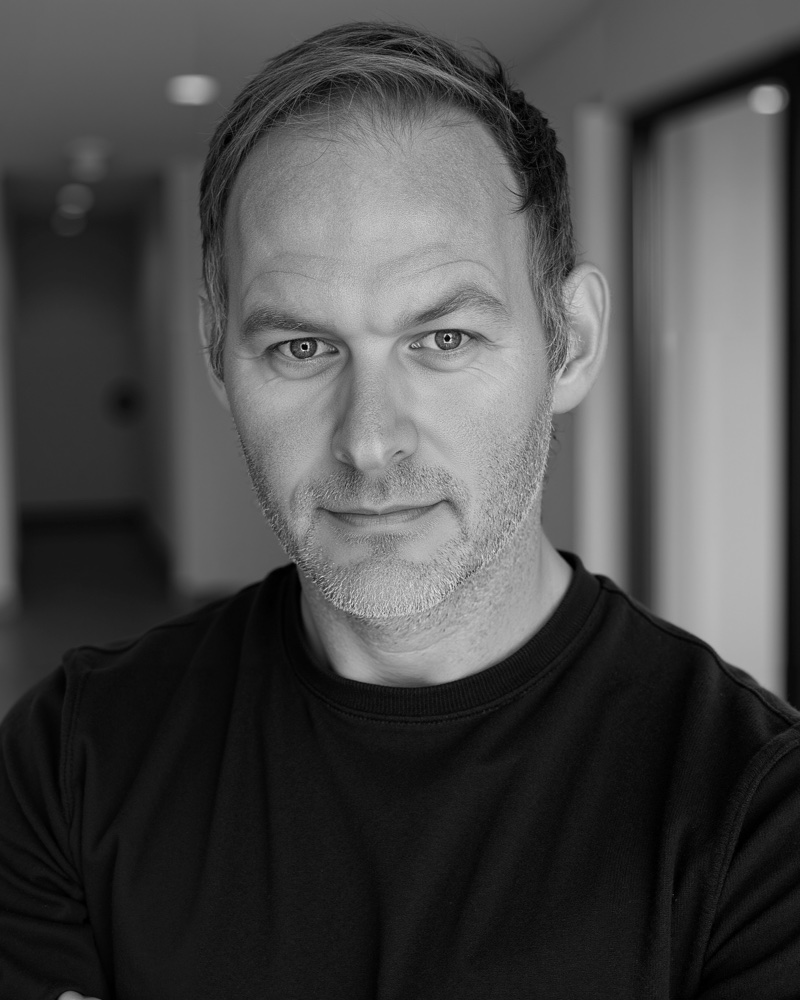
Jayson Robinson is the founder of Polyviam and runs all coaching engagements personally. Over the last decade he has led growth and marketing strategy for B2B companies including BairesDev and Toptal — both US unicorns — alongside building his own businesses. He has designed and executed marketing strategies that have collectively driven over $120M in incremental annual revenue for clients.

Alongside operator work, he coaches and teaches. He has taught or coached over 500 product managers, marketers, execs, and founders from organisations like Spotify, Accenture, LEGO Group, and the UK Home Office (plus hundreds of lesser-known organisations).

Based in London, working with operators across the UK, US, and Europe.

More on the about page.

№ 09: More
№ 10: Begin
10: Begin

Start with a 30-minute intro.

We'll discuss your goals and your level of fluency and maturity. By the end we'll know the type of engagement you need.