№ 01: Premise
Premise

Marketing strategy consulting for CMOs who feel the old funnel breaking.

We work with established businesses that need to rethink their position in the AI-era. We design strategies connecting ICP, competitors, market trends, channels, product fit, and internal capability. Our strategies have collectively delivered $120M+ in incremental annual revenue for clients.

Audience
CMOs, VPs, and heads of marketing at established companies (typically $10M+ revenue)
Format
Defined-scope project · 2–12 weeks · Founder-led
Location
Remote globally · In-person available in London, UK
Clients
BairesDevToptalPathos CommunicationsBetterEngineer & more
№ 02: Audience
02: Audience

This is for CMOs whose marketing strategy still assumes the pre-AI market.

Your current strategy was built on assumptions that no longer hold: how buyers find you, how the team works, and what makes the company meaningfully different.

Shift 01

Buyer discovery has moved.

Generative search surfaces — AI Overviews, ChatGPT, Perplexity, Copilot — plus peer communities and dark social now shape the shortlist before your analytics stack sees intent. SEO is not dead, but the strategic question has changed from "how do we rank?" to "why would an AI system, analyst, peer, or buyer cite us as the answer?"

Shift 02

Productivity is not equally distributed.

AI makes the production layer of marketing dramatically cheaper. Individuals using it well are already faster; management systems have not caught up. The bottleneck moves to judgement, taste, prioritisation, and the ability to redesign how the team works.

Shift 03

Brand is non-optional.

When everyone can generate competent copy and creative, marketing gets cheaper and less useful at the same time. The advantage moves back to clear positioning, unique customer/market insight, trust, product fit, and a brand that customers identify with.

№ 03: Headwinds
03: Headwinds
95% of B2B buyers plan to use generative AI during future purchase decisions.

Source Forrester

01

Discovery is increasingly happening outside your website.

02

Buyers are comparing vendors faster, and with less context.

03

Trust signals are abstracted and normalised via gen-AI.

The funnel has shifted. If you’re still optimising for a 2022 buying journey, you’re executing a strategy centred on declining buyer behaviour. You are fighting gravity.

№ 04: Synthesis
04: Synthesis

We write your marketing strategy and roadmap.

A high-leverage marketing strategy document should be one page or less, plain text. Lots of preceding work gets synthesised into that output. This is what the artefacts of an engagement might typically contain.

Inputs
Market research
  • Competitor analysis
  • Brand positioning
  • Market sizing
  • ICP and segmentation
User research
  • UX audit
  • Friction analysis
  • Journey mapping
  • Qualitative user studies
Quantitative analysis
  • Funnel analysis
  • Cohort analysis
  • Channel effectiveness review
  • Attribution & measurement
Internal assessment
  • Stakeholder interviews
  • Workshops
  • Team interviews
  • Product portfolio mapping
Synthesis
Marketing Strategy (1-pager)
Outputs
  • Marketing roadmap
  • ICP Maps
  • Messaging Framework
  • Positioning recommendations
  • Experiment backlog
№ 05: Proof
05: Proof

Some of the marketing leaders we've worked with.

We're obsessed with growth. It's all we talk about. And one of the people who've really helped us adapt to the next phase of growth is Jayson. You feel that he is playing the long-game with you from the start.

Omar Hamdi · CEO & Founder @ Pathos Communications | Listed 2025
  1. i. BairesDev
  2. ii. Toptal
  3. iii. Pathos Communications
  4. iv. BetterEngineer
  5. v. CloudTask
№ 06: Strategist
06: Strategist

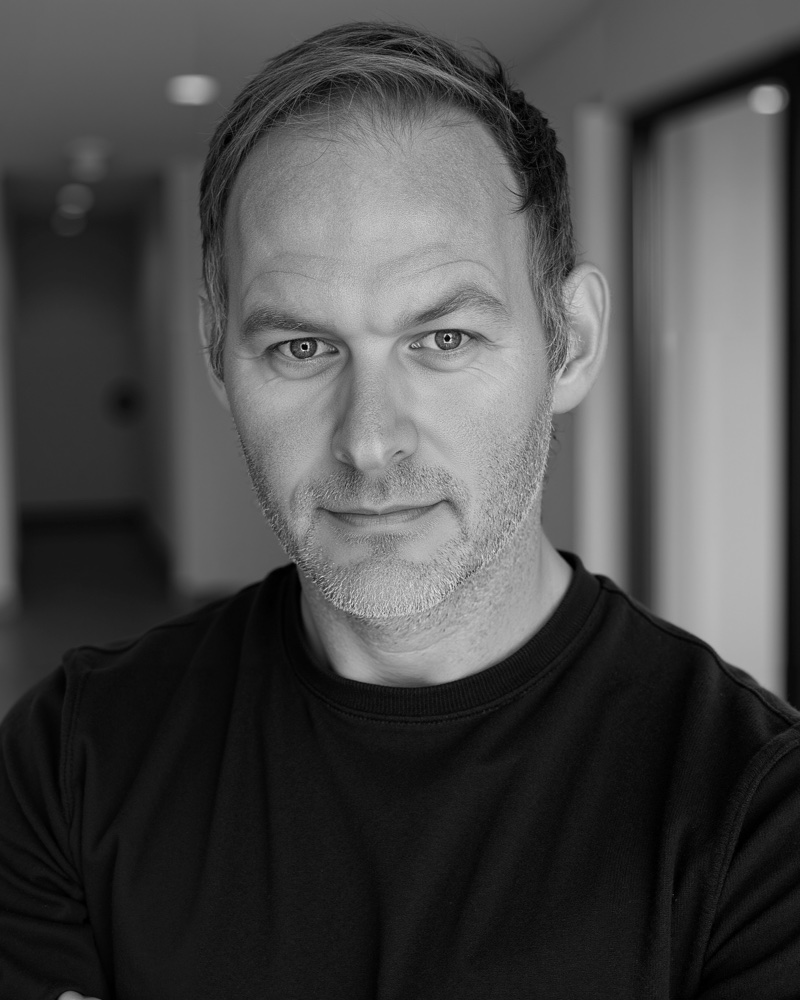
About your strategist.

Jayson Robinson is the founder of Polyviam and runs all consulting engagements personally. Over the last decade he has led growth and marketing strategy for B2B companies including BairesDev and Toptal — both US unicorns — alongside building his own businesses. He has designed and executed marketing strategies that have collectively driven over $120M in incremental annual revenue for clients.

Alongside operator work, he coaches and teaches. He has taught or coached over 500 product managers, marketers, execs, and founders from organisations like Spotify, Accenture, LEGO Group, and the UK Home Office (plus hundreds of lesser-known organisations).

Based in London, working with operators across the UK, US, and Europe.

More on the about page.
№ 07: Questions
07: Questions

Common questions about marketing strategy consulting.

Who is this marketing strategy consulting for?

CMOs, VPs of marketing, and heads of marketing at established B2B companies — mid-market and up, typically $10M+ revenue or 100+ employees as a floor. The work assumes you already lead a marketing function with a budget, a team, and a revenue target. It is not designed for solopreneurs, pre-revenue startups, or in-house marketers without budget ownership.

Is this a marketing strategy consultant engagement or fractional CMO work?

This is a B2B marketing strategy consultant engagement: a defined-scope project that produces a written strategy, not fractional CMO cover or ongoing campaign delivery.

How is this different from the operating model engagement?

Marketing strategy is the content of the strategy — positioning, ICP, channel mix, what to do. Operating model consulting is about how the marketing team is structured to deliver — team shape, decision rights, agency relationships, headcount, rituals. Most CMOs need marketing strategy first. Some need both. The initial intro call tells us what is needed.

What is the final deliverable for a marketing strategy consulting engagement?

Our end-target is a high-impact 1-pager as a written document. That is usually backed up by a handful of other artefacts like market research, UX studies, workshop outputs and synthesis, interview notes, quantitative product data, ICP/persona definition — anything. The whole point is to get from lots of information to synthesised direction in as few words as possible.

How long does the engagement take?

A simple project may be 2 weeks, while more complex projects might be up to 12 weeks. Specific timelines depend on stakeholder availability and complexity of the org.

How much does marketing strategy consulting cost?

Engagements are most often on a time and materials basis. We discuss costs on the intro call, but minimum engagement size is $5,000.

How is this different from McKinsey, Bain, BCG, or Accenture Song?

As a former Deloitte consultant, the main differences are price and approach. On price, you will typically pay for people you either don't need or who don't add much value — partners and analysts. On top of that, you're paying the brand premium for 'insurance'. On approach, big consultancies tend to over-framework engagements to reduce their own risk, rather than to permit creative, first-principles problem-solving on each unique project. By contrast, Polyviam is founder-delivered (Jayson runs every engagement) and treats each business as unique. We do, of course, draw on frameworks as they fit a situation, but we prioritise deep understanding and first-principles thinking first.

Do you recommend specific AI tools or vendors?

Not as generalised recommendations. Only if required in the engagement, and only fitting the situation of the team. We aren't tied to any vendor.

Do you work with early-stage or pre-PMF teams?

No. Polyviam works at mid-market scale and upwards. Below $10M revenue, strategy is simpler, lower-leverage, and faster-cycle. As organisations grow in complexity or scale, cogent strategy becomes more important.

№ 08: More
№ 09: Begin
09: Begin

Start with a 30-minute intro call.

A diagnosis-themed conversation. We'll ask lots of questions and by the end have a clear picture of the type of engagement you need.