№ 01: Premise
Premise

Operating model consulting for teams reshaping work around AI.

We redesign how product, growth, and marketing teams make decisions, assign ownership, govern AI use, structure headcount, and move work through the business. Built for leadership teams trying to make AI useful beyond isolated productivity gains.

Audience
CEOs, CPOs, CMOs, and senior product or marketing leaders at companies with $10M+ revenue
Format
Defined-scope project · 4–12 weeks · Founder-led
Location
Remote globally · In-person available in London, UK
Clients
BairesDevToptalGridscaleBetterEngineer & more
№ 02: Audience
02: Audience

This is for leaders whose team design still assumes the pre-AI workflow.

The work has changed faster than the operating model: fewer clean handoffs, more hybrid roles, faster artefact production, weaker boundaries between strategy and execution, and a larger gap between individual leverage and organisational throughput.

Shift 01

The bottleneck moved to judgement.

AI compresses research, drafting, analysis, prototyping, QA, and campaign production. That does not automatically make the team faster. It exposes where decisions stall, where approvals are ornamental, and where the organisation confuses activity with progress.

The operating question is shifting from “Who does the task?” to “Who is trusted to decide what good looks like?”

Shift 02

Roles are broadening; ownership is murkier.

Designers can make prototypes in code. Engineers can produce mockups and write copy. AI is expanding what each role can produce, but it is also making ownership harder to read. Existing role boundaries still matter, but they no longer explain who should lead, review, decide, or bring specialist judgement into the work.

Shift 03

AI policy is not an operating model.

Most companies now have tool access, acceptable-use rules, and scattered experiments. That is not the same as knowing where AI owns the first draft, where humans must retain judgement, what evidence is required, who reviews output, and which workflows should be redesigned rather than merely accelerated.

№ 03: Headwinds
03: Headwinds
82% of leaders expect digital labour to expand workforce capacity in the next 12–18 months.

Source Microsoft Work Trend Index

01

Individual AI use is spreading faster than team-level operating design.

02

Productivity gains concentrate where judgement and workflow rules are explicit.

03

Headcount, vendor, and agency plans still assume the old production cost curve.

AI adoption without operating-model change creates local speed and system-level confusion. If the org chart, rituals, metrics, and decision rights stay fixed, the team becomes busier while the company gets less legible.

№ 04: Synthesis
04: Synthesis

We write your target operating model and transition plan.

A high-leverage operating model should name how the team actually decides, staffs, governs, and reviews work. The supporting analysis is team architecture, workflow reality, AI leverage, performance system, and stakeholder alignment. This is what the artefacts of an engagement might typically contain.

Inputs
Team architecture
  • Org-shape review
  • Role and ownership mapping
  • Decision-rights audit
  • Agency and vendor boundary review
Workflow reality
  • Planning artefact review
  • Ritual and meeting audit
  • Handoff analysis
  • Friction and rework diagnosis
AI leverage
  • Use-case inventory
  • Automation/augmentation calls
  • Review and governance rules
  • Capability threshold definition
Performance system
  • Cycle-time and throughput review
  • Planning-cadence teardown
  • Headcount and budget model
  • Incentive and metric review
Synthesis
Operating Model (target state)
Outputs
  • Target team shape
  • Decision-rights map
  • Workflow redesign
  • AI governance model
  • Transition roadmap
№ 05: Proof
05: Proof

Some of the operators we've worked with.

As part of a successful startup, I moved into my first C-level position relatively quickly.

Jayson was easily able to understand our business and break down my challenges in ways which helped me to solve them much more quickly and creatively than could have doing it alone.

Marc Harriss · CPO @ Gridscale, Acquired 2023
  1. i. BairesDev
  2. ii. Toptal
  3. iii. Gridscale
  4. iv. BetterEngineer
  5. v. Continuo Foundation
№ 06: Strategist
06: Strategist

About your strategist.

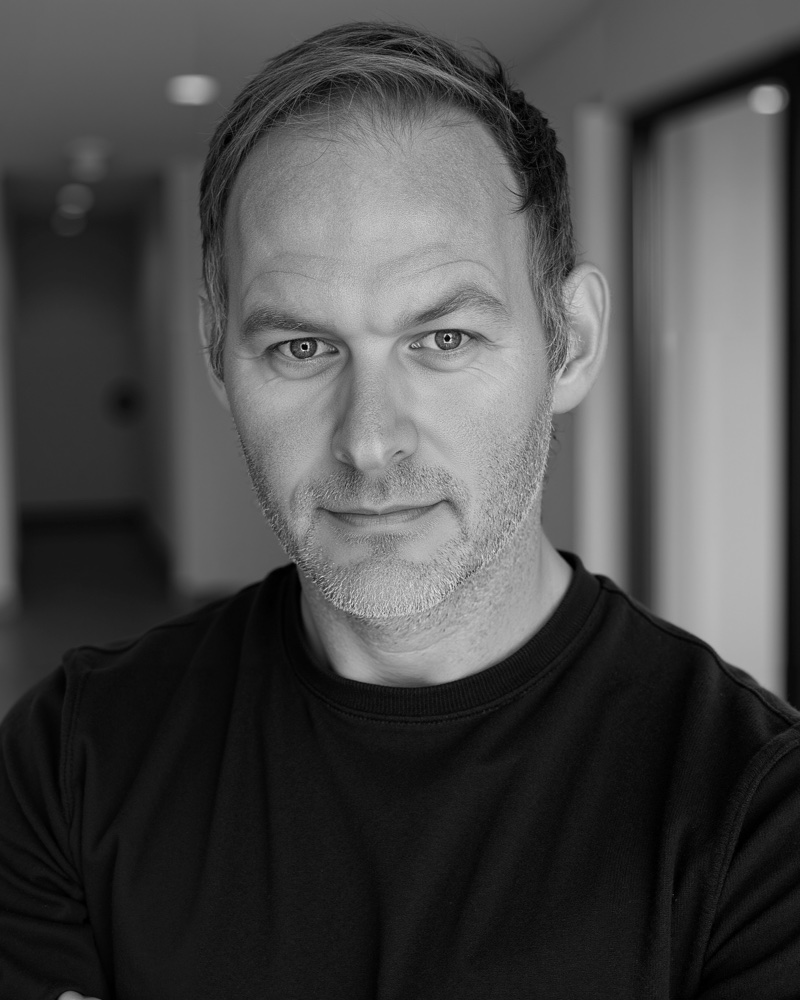
Jayson Robinson is the founder of Polyviam and runs all consulting engagements personally. Over the last decade he has led growth and marketing strategy for B2B companies including BairesDev and Toptal — both US unicorns — alongside building his own businesses. He has designed and executed marketing strategies that have collectively driven over $120M in incremental annual revenue for clients.

Alongside operator work, he coaches and teaches. He has taught or coached over 500 product managers, marketers, execs, and founders from organisations like Spotify, Accenture, LEGO Group, and the UK Home Office (plus hundreds of lesser-known organisations).

Based in London, working with operators across the UK, US, and Europe.

More on the about page.

№ 07: Questions
07: Questions

Common questions about operating model consulting.

Who is this operating model consulting for?

CEOs, CPOs, CMOs, VPs of growth, and senior product or marketing leaders at established B2B companies — mid-market and up, typically $10M+ revenue or 100+ employees as a floor. The work assumes there is already a team, a cadence, a budget, and cross-functional friction worth resolving. It is not designed for founders making their first few hires.

How is this different from product strategy or marketing strategy consulting?

Product and marketing strategy answer what the company should do: positioning, roadmap, channel mix, pricing, portfolio calls. Operating model consulting answers how the team should work: decision rights, role boundaries, rituals, headcount, agency relationships, AI ownership, and governance. Strategy without an operating model often dies in translation. Operating-model work without strategy often optimises the wrong system.

Is this target operating model consulting or org design?

It is target operating model consulting for product, growth, and marketing teams. Org design is part of it, but the work also covers decision rights, workflow redesign, AI governance, rituals, measurement, and transition planning.

What is the final deliverable for an operating model consulting engagement?

Our end-target is a written target operating model: team shape, named decision rights, role-boundary changes, workflow redesign, AI governance rules, meeting cadence, headcount and agency implications, and a transition roadmap. The supporting artefacts usually include stakeholder interview synthesis, workflow maps, org-shape options, decision-rights matrix, AI use-case inventory, and a leadership briefing.

How long does the engagement take?

A narrow operating-model diagnostic may be 2–3 weeks. A full target operating model is usually 6–12 weeks because it requires stakeholder interviews, artefact review, workflow mapping, and leadership alignment. Specific timelines depend on team size, cross-functional complexity, and how quickly we can access the people doing the work.

How much does operating model consulting cost?

Engagements are most often on a time-and-materials basis. We discuss costs on the intro call, but minimum engagement size is $5,000.

How is this different from Deloitte, Accenture, or an org-design consultancy?

Large consultancies are strongest when the transformation is enterprise-wide, politically complex, and needs a large delivery machine. Polyviam is narrower: product, growth, and marketing operating models in established B2B companies, especially where AI changes the work. The engagement is founder-delivered, written, and specific. You are not buying a transformation programme; you are buying the operating-model judgement that should precede one.

Do you write AI policies or choose AI tooling?

Only as part of the operating model. We can specify where AI should be used, what review rules are needed, which workflows should change, and what tool categories are required. We do not sell vendor selection as a standalone project, and we are not tied to any AI platform.

Do you implement the new operating model?

No. We define the target state and transition plan, then hand the work to the accountable leader and team. Some clients continue with coaching while they implement the change, but the consulting deliverable itself is the written operating model and leadership briefing.
№ 08: More
№ 09: Begin
09: Begin

Start with a 30-minute intro call.

A diagnosis-themed conversation. We'll ask lots of questions and by the end have a clear picture of the type of engagement you need.