№ 01: Premise
Premise

Growth marketing consulting for teams adapting to an AI-shaped funnel.

We write growth strategies for established B2B growth teams adapting to AI-mediated discovery, weaker click-path visibility, and buyer journeys that start before your CRM sees intent. Our growth strategies have an attributed $120M+ in incremental annual revenue.

Audience
VPs and Directors of growth, or CGOs, at established companies (typically $10M+ revenue)
Format
Defined-scope project · 4–10 weeks · Founder-led
Location
Remote globally · In-person available in London, UK
Clients
BairesDevToptalCloudTaskBetterEngineer & more
№ 02: Audience
02: Audience

This is for growth leaders whose playbook still assumes the visible funnel.

Your targets were set against a buyer journey your dashboards only partially observe: AI answers, peer validation, sales conversations, and quiet internal consensus all shape demand before conversion is recorded.

Shift 01

Distribution is being re-priced.

Google still matters. LinkedIn still matters. Email still matters. But the growth question is no longer “Which channel scales?” It is “Which surfaces shape preference before the buyer can be retargeted?”

ChatGPT, Perplexity, AI Overviews, analyst pages, community threads, partner ecosystems, and comparison content now influence shortlists with inconsistent referral trails.

Shift 02

Paid media is more automated, not more strategic.

Ad platforms have absorbed more targeting, bidding, and creative assembly. That makes weak signal design more dangerous. If the machine is optimising toward low-quality leads, the error compounds faster than a human media buyer could manage manually. The strategic work is deciding what deserves credit before automation spends against it.

Shift 03

Content volume has stopped being a moat.

AI made competent production cheap. That does not make growth easier. It makes undifferentiated output invisible. The advantage moves to first-party evidence, strong category language, opinionated comparison, credible proof, and content assets that answer engines and buyers can cite without smoothing the point away.

№ 03: Headwinds
03: Headwinds
AI visitors are estimated to be 4.4x more valuable than traditional organic search visitors.

Source Semrush

01

AI-referred traffic is small enough to be ignored, but commercially sharp enough to matter.

02

Zero-click and answer-led discovery weaken traffic as the main proxy for demand.

03

Attribution systems still over-credit the final visible touch.

The visible funnel is shrinking as a source of truth. If your budget model still equates “trackable” with “valuable”, you will overfund the surfaces that report cleanly and underfund the ones that actually pre-sell the deal.

№ 04: Synthesis
04: Synthesis

We write your growth strategy and measurement plan.

A high-leverage growth strategy should make budget, channel, and measurement decisions explicit. The supporting work is funnel economics, AI visibility, channel portfolio analysis, attribution redesign, sales feedback, and operating cadence. This is what the artefacts of an engagement might typically contain.

Inputs
Funnel economics
  • Pipeline-stage leak analysis
  • CAC and payback review
  • Conversion-quality split
  • Sales-cycle drag diagnosis
Discovery surfaces
  • Search and AI visibility audit
  • Community and dark-social review
  • Referral and partner paths
  • Citation signal mapping
Channel portfolio
  • Paid acquisition teardown
  • Organic portfolio review
  • Experiment ledger
  • Budget-allocation model
Measurement system
  • Attribution-model review
  • CRM and RevOps handoff
  • Sales feedback interviews
  • Operating cadence review
Synthesis
Growth Strategy (1-pager)
Outputs
  • Funnel diagnostic
  • Channel priorities
  • AI visibility plan
  • Measurement spec
  • Multi-quarter growth roadmap
№ 05: Proof
05: Proof

Some of the growth leaders we've worked with.

We're obsessed with growth. It's all we talk about. And one of the people who've really helped us adapt to the next phase of growth is Jayson. You feel that he is playing the long-game with you from the start.

Omar Hamdi · CEO & Founder @ Pathos Communications | Listed 2025
  1. i. BairesDev
  2. ii. Toptal
  3. iii. CloudTask
  4. iv. BetterEngineer
  5. v. Pathos Communications
№ 06: Strategist
06: Strategist

About your strategist.

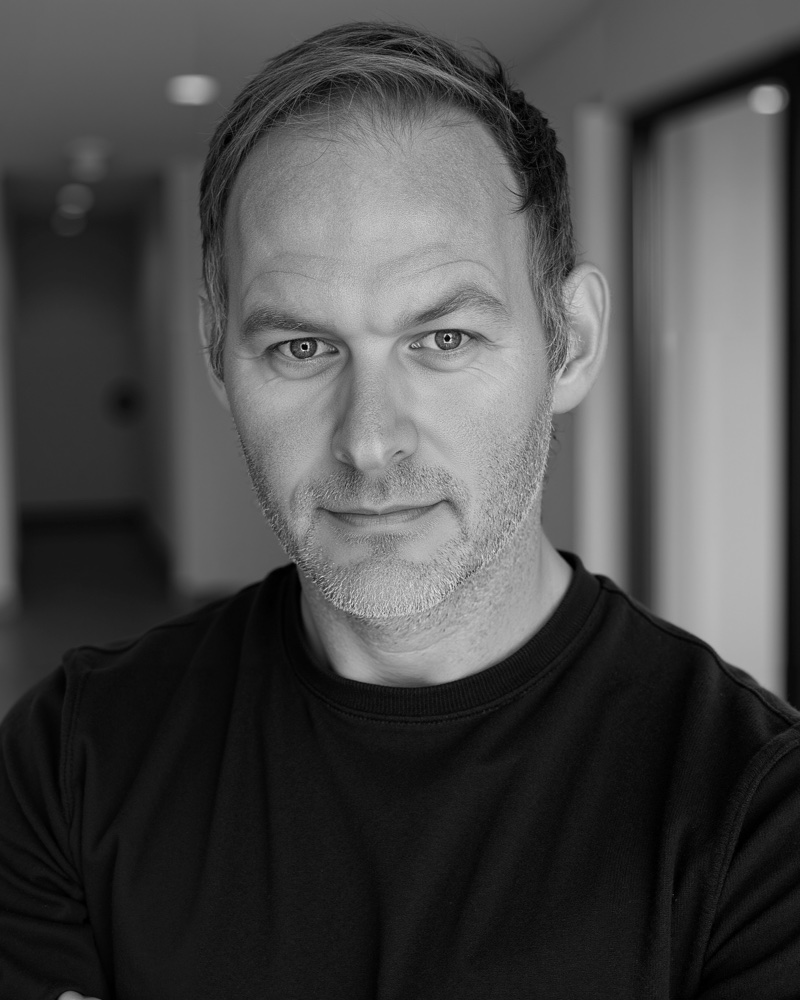
Jayson Robinson is the founder of Polyviam and runs all consulting engagements personally. Over the last decade he has led growth and marketing strategy for B2B companies including BairesDev and Toptal — both US unicorns — alongside building his own businesses. He has designed and executed marketing strategies that have collectively driven over $120M in incremental annual revenue for clients.

Alongside operator work, he coaches and teaches. He has taught or coached over 500 product managers, marketers, execs, and founders from organisations like Spotify, Accenture, LEGO Group, and the UK Home Office (plus hundreds of lesser-known organisations).

Based in London, working with operators across the UK, US, and Europe.

More on the about page.

№ 07: Questions
07: Questions

Common questions about growth marketing consulting.

Who is this growth marketing consulting for?

VPs of growth, VPs of demand generation, heads of growth, and revenue marketing leaders at established B2B companies — mid-market and up, typically $10M+ revenue or 100+ employees as a floor. The work assumes you already own a pipeline target, a channel budget, and some form of attribution stack. It is not designed for pre-PMF startups, solo founders, or companies asking someone to run campaigns for them.

Is this a growth marketing consultant engagement or a growth agency engagement?

This is a growth marketing consultant engagement: a defined-scope strategy project for funnel economics, channel priorities, AI visibility, attribution, and measurement. We do not run campaigns or replace your agency.

How is this different from marketing strategy consulting?

Marketing strategy is the broader company-level strategy: positioning, ICP, narrative, channel mix, and the role of marketing in the business. Growth marketing consulting is narrower and more operationally commercial: funnel economics, channel sequencing, paid and organic acquisition, AI visibility, attribution, and the marketing-to-pipeline system. Some CMOs need both, but the two questions should not be blurred.

What is the final deliverable for a growth marketing consulting engagement?

Our end-target is a one-page growth strategy document, plain text. Named channel priorities, budget shifts, measurement changes, AI visibility calls, and the operating cadence required to run it. That one page is backed by the supporting analysis — funnel diagnostic, channel teardown, attribution review, search, generative search, and AI visibility audit, sales feedback synthesis, and a multi-quarter growth roadmap.

How long does the engagement take?

A simple diagnostic may be 2 weeks; a full growth strategy is usually 4–10 weeks. Specific timelines depend on data access, stakeholder availability, channel breadth, and whether sales and RevOps need to be included in the research.

How much does growth marketing consulting cost?

Engagements are most often on a time-and-materials basis. We discuss costs on the intro call, but minimum engagement size is $5,000.

How is this different from Reforge, Demand Curve, Refine Labs, or a growth agency?

Reforge and Demand Curve are useful for learning growth systems and tactics, but they do not produce a defended strategy for your specific funnel. Refine Labs and strong growth agencies can run execution, but their incentives usually attach to ongoing delivery. Polyviam is strategy-only, founder-delivered, and vendor-neutral. We write the growth strategy your team, current agency, or future agency can execute.

Do you implement campaigns or manage paid media?

No. We do not run the channels for you. We specify what should change, what signals the platforms should optimise against, what channel bets deserve budget, and what measurement system should govern them. If implementation is the right next step, we hand the strategy to your team, existing agency, or a better-fit specialist.

Do you work with early-stage or pre-PMF teams?

No. Polyviam works at mid-market scale and upwards. Pre-PMF growth is mostly cheap experimentation, founder-led sales, and fast message testing. A 12-month growth strategy before the market has spoken is often premature precision.
№ 08: More
№ 09: Begin
09: Begin

Start with a 30-minute intro call.

A diagnosis-themed conversation. We'll ask lots of questions and by the end have a clear picture of the type of engagement you need.