№ 01: Premise
Premise

Marketing coaching for the AI‑era CMO.

Hands-on coaching for CMOs, VPs of marketing, and heads of marketing at established companies navigating how AI changes their team op model.

Audience
CMOs, VPs, and heads of marketing at established B2B companies (mid-market and up; $10M+ revenue or 100+ employees as a floor)
Format
1:1 coaching · 3+ month engagement · 2/4 times per month
Location
Remote globally · in-person available in London, UK
Coach
Jayson Robinson · ex-Toptal, BairesDev
Clients
BairesDevToptalPathosContinuo & more
№ 02: Audience
02: Audience

Who this marketing coaching is built for.

Three patterns we see in the marketing leaders we coach. If one of them sounds like the conversation in your last team meeting, the work will fit.

Pattern 01

All gas, no traction.

Your team is doing more — more campaigns, more variants, more touchpoints. The dashboards are up and to the right. But the pipeline number hasn't moved, and you can't tell whether AI is creating attributable value, your measurement is broken, or you're just running faster on the same wheel. The work is separating attributable lift from activity, then redesigning the bets so AI shows up where it actually changes economics.

Pattern 02

Broken model, louder problems.

You inherited a marketing operating model that wasn't really working — fuzzy briefs, weak distribution, attribution nobody trusts — and bolted AI on top. Now the same problems run at 5× speed. The team is busier, the meetings louder, and the gap between activity and outcome is wider than before. The work is fixing the upstream operating model first, then putting AI where the fixed model has actual leverage.

Pattern 03

The content quality cliff.

Your team is shipping 3× more content with AI in the loop. The brief, the draft, the variants are all faster. But the lifts from a great long-form piece aren't landing, and AI quietly sanitised your voice into the same shape as everyone else's. The work is moving AI off the draft and onto research, distribution, and QA; writing down the specific tics and edit rules that keep voice alive through the pipeline.

№ 03: Engagement
03: Engagement

What a marketing coaching engagement actually involves.

Coaching is the working format; AI-native marketing operating-model design sits behind every conversation. Sessions are built around the decisions already on your desk: the quarterly roadmap, the headcount plan, the agency renewal. Not a generic CMO curriculum.

Cadence

60 or 90 minute sessions, every one or two weeks. Sessions are working sessions: we tackle the decision in front of you and the AI-native angle on it. Async between sessions on Slack, Loom, or email.

Where AI fits in

Every marketing coaching engagement at Polyviam carries the same lens. We work out where AI actually creates value across your funnel — research, content, creative, lifecycle, analytics, ops — and where it is wasted motion. The point is to make you able to spot the difference yourself, on the next call your team brings you.

What we cover, typically

  • Marketing operating model: how the team plans, briefs, ships, and reviews work.
  • Content system redesign: where AI lives in the editorial pipeline and where humans do.
  • Headcount and team shape for an AI-native marketing function.
  • Agency mix: what to keep, what to internalise, and on what timeline.
  • Stack rationalisation and where AI tools earn their seat.
  • Your own operating model as the marketing leader.

Format options

Standard format is 1:1 with the marketing leader. Marketing leadership pairs (CMO + VP, or CMO + head of growth) occasionally run as a small group at slightly different cadence. Whole-team coaching is a separate offer — see team coaching.
№ 04: Difference
04: Difference

Most marketing coaching fails in the same few ways.

When CMO and marketing-leader coaching fails, it fails in a small set of recognisable patterns. These are the five Polyviam is structurally built to avoid.

  • i. AI as the lens, not AI as a topic. Many CMO coaches still treat AI as a discrete topic — a module on prompts, a session on tools, maybe a guest on AI ethics — sitting inside a generic CMO curriculum. We treat AI as the lens behind every session, because the change to marketing isn't a topic, it's a redesign of how the function operates. A programme that hasn't restructured around that is years behind.
  • ii. Established companies only. Search 'marketing coaching' and the top results are creator-coaches, course-sellers, and LinkedIn-famous marketers running SMB-targeted programmes. Useful for that audience, wrong fit for the one we serve. We coach marketing execs running mature teams with budgets and pipeline targets. If you don't run a team and own a number, this is the wrong service.
  • iii. Operator-coach, not professional coach. Most marketing coaches are either certification-track executive coaches who added marketing later or solo marketers who built a coaching product after a viral year on LinkedIn. Jayson ran growth teams at BairesDev and Toptal, both US unicorns, and runs his own marketing operations. The work is marketer-to-marketer.
  • iv. We don't ship the marketing work for you. The marketing world is full of fractional CMOs, agencies-pivoted-to-advisory, and retainer arrangements that quietly drift into doing the work themselves, becoming a line on your budget indefinitely. Polyviam doesn't run your campaigns, write your content, or sit between your team and its output. Capability lives with your team. That guardrail is what makes the work compound after we leave, instead of a dependency you can't end.
  • v. We tell you when you're wrong. Most marketing coaches come from the certification-track ethics, where directive feedback is discouraged. The work is Socratic questions until the coachee reaches their own conclusion. Wrong format for an AI-era CMO under board pressure. Expect to be told when the plan is wrong, the agency call is wrong, or the brief you're about to send will produce slop at 5× speed. That's what makes the work worth more than talking to yourself, your board, or Claude.
№ 05: Outcomes
05: Outcomes

Coaching outcomes are the calls you make differently.

  • 01 — Marketing AI Thesis

    You can clearly articulate where AI changes the unit economics of your marketing function across content, research, paid, and lifecycle, and where it doesn't. Most CMOs can't, and it shows in their board updates.

  • 02 — Operating Model

    You've redesigned at least one core marketing workflow around AI — usually content, research, or campaign ops — rather than bolting AI onto an existing one. The change is visible in throughput, in headcount, and in what your team's day looks like.

  • 03 — Team Capability

    Your team is using AI fluently, not just you. The senior marketers on your team are surfacing AI opportunities every month and killing the tempting-but-wrong ones with reasoning you can audit. The judgement travels.

№ 06: Proof
06: Proof

Some of the marketing leaders we've worked with.

We're obsessed with growth. It's all we talk about. And one of the people who've really helped us adapt to the next phase of growth is Jayson. You feel that he is playing the long-game with you from the start.

Omar Hamdi · CEO & Founder @ Pathos Communications | Listed 2025
  1. i. Gridscale
  2. ii. BairesDev
  3. iii. Cloudtask
  4. iv. BetterEngineer
  5. v. Continuo Foundation
№ 07: Questions
07: Questions

Common questions about marketing coaching.

Who is this marketing coaching actually for?

CMOs, VPs of marketing, and heads of marketing at established B2B companies — mid-market and up, typically $10M+ in revenue or 100+ employees as a floor. It is not for solopreneur marketers, SMB owner-operators wearing the marketing hat, or pre-revenue startups looking for someone to teach them the basics of paid acquisition. The work assumes you already run a marketing team and own a marketing P&L.

What is the difference between marketing coaching and marketing consulting?

Coaching is you doing the work, with us in the room. Consulting is us doing the work and handing it over. Coaching is what you choose when you want the muscle to stay in-house. Consulting is what you choose when there is a defined-scope output you need produced. Many marketing leaders combine both: coaching on the strategic and team-shaping calls, consulting on a specific build (e.g. inbound infrastructure, lifecycle programme).

How much does CMO coaching cost?

Engagement pricing is on request and sized to scope. Sessions are 60 or 90 minutes, weekly or fortnightly, on an ongoing monthly contract. Most engagements run three to twelve months.

Do you coach in-house marketers or agency-side marketers?

In-house only. The work is operating-model design, headcount calls, and where AI installs in your stack — questions that only make sense when the marketing function lives inside the company that owns the P&L. Agency marketers and consultancy partners face genuinely different structural problems (positioning, productisation, margin under AI pressure) and are better served by coaches who specialise in agency work.

My team is using ChatGPT but nothing has really changed. Is that the kind of problem this fixes?

Yes — that is the most common starting state. The work is moving from individual tool use ("the writers use Claude for drafts") to operating model change ("we redesigned the content pipeline so AI is doing the legwork and humans are doing the judgement calls"). The shift is structural, not tactical.

Is this just standard CMO coaching with AI bolted on?

No. AI is the lens, not a topic. Marketing is the function where AI economics hit hardest first — content, research, lifecycle, paid creative, analytics, ops. A coaching engagement that treats AI as one chapter in a generic CMO programme is already out of date for 2026. Every conversation here sits behind the same question: how does AI change how this part of your marketing system operates.

Do you work with marketers at startups or smaller companies?

No. Polyviam works at mid-market scale and upwards. Early-stage and SMB marketers are well-served by other coaches and the existing creator-coach market. The questions a head of marketing at a 200-person B2B SaaS asks are structurally different from the ones a solo marketer at a 10-person seed-stage company asks, and the work should not be the same.

№ 08: Coach
08: Coach

About your coach.

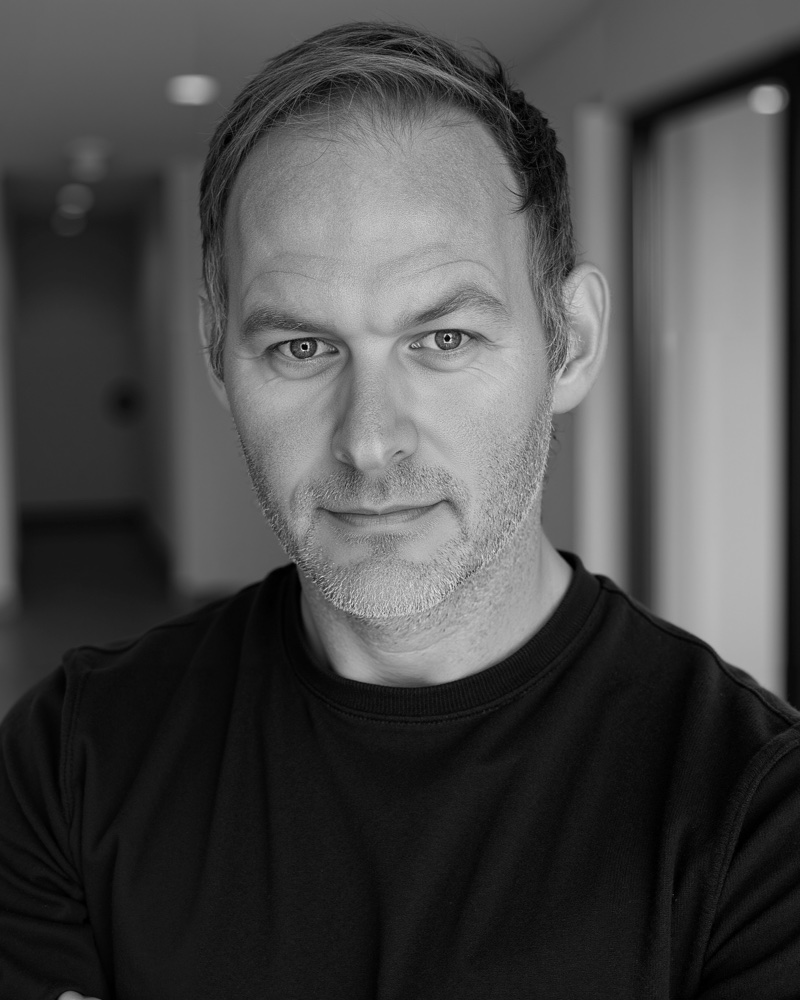
Jayson Robinson is the founder of Polyviam and runs all coaching engagements personally. Over the last decade he has led growth and marketing strategy for B2B companies including BairesDev and Toptal — both US unicorns — alongside building his own businesses. He has designed and executed marketing strategies that have collectively driven over $120M in incremental annual revenue for clients.

Alongside operator work, he coaches and teaches. He has taught or coached over 500 product managers, marketers, execs, and founders from organisations like Spotify, Accenture, LEGO Group, and the UK Home Office (plus hundreds of lesser-known organisations).

Based in London, working with operators across the UK, US, and Europe.

More on the about page.

№ 09: More
№ 10: Begin
10: Begin

Start with a 30-minute intro.

We'll discuss your goals and your level of fluency and maturity. By the end we'll know the type of engagement you need.