№ 01: Index
Strategy & coaching, London

AI adoption is widespread. AI advantage is not.

We help product and marketing leaders identify high-impact use cases, redesign processes, and increase AI fluency across the team.

№ 01b: Priors

Coached, taught, and advised at over 100 companies.

№ 02: Gap
02: Gap

Some teams have hit 10x productivity gains from AI.
Most haven't seen any improvement.

55%
Faster task completion among GitHub Copilot users on coding work.
Src. GitHub Research
8–10×
Productivity gains for the highest-performing AI adopters versus the median, per State of AI 2024.
Src. McKinsey
78%
Of workers use AI, yet only ~30% of organisations have integrated it into team workflows.
Src. Microsoft Work Trend Index

Has your marketing team felt this yet?
Has your product team?

№ 03: Thesis
03: Thesis

Teams that pull ahead don't buy more AI.
They figure out where to install it.

  • i. In how individuals work, learn, and create.
  • ii. In how teams operate, communicate, and decide.
  • iii. In how products are designed, shipped, and improved.
  • iv. In how marketing is researched, produced, and measured.
№ 04: Work
04: Work

We close the gap between adoption and advantage.

Some organisations need strategic clarity. Others need hands-on capability development. We work across both, depending on where the constraint sits.

Coaching

Hands-on, practical AI capability development.

Founders · CEOs · Product & marketing execs

Coaching programmes for leaders adapting teams to the realities of AI. Designed around live work, operational constraints, and the decisions already on your desk.

  • 1:1 or group coaching
  • Team-level operating model coaching
  • AI-centred workflow design
  • In-house capability transfer to leave you self-sufficient.
Explore coaching
Consulting

AI-era strategy for product and marketing.

Scope-based · Senior-only · Decisions, not decks

Engagements designed to create strategic clarity and roadmap confidence across product and marketing. Focused on where AI can produce meaningful gains.

  • AI opportunity assessment in teams, ops, and UX
  • Growth and positioning strategy
  • Product direction and roadmap evaluation
  • Evidence-led recommendations sized to the problem
Explore consulting
№ 05: Proof
05: Proof

As part of a successful startup, I moved into my first C-level position relatively quickly.

Jayson was easily able to understand our business and break down my challenges in ways which helped me to solve them much more quickly and creatively than could have doing it alone. Jayson was a large contributor to most strategic topics I went through during our time together, both as a coach and accountability partner.

Marc Harriss
CPO @ Gridscale | Acquired 2023

“I can’t tell you what a difference you have made to the Connect project, and to Continuo as a whole, as this project is central to our long term future as a charity.”

Tina Vadaneux Founder @ Continuo Foundation

“We’re obsessed with growth. It’s all we talk about. And one of the people who’ve really helped us adapt to the next phase of growth is Jayson. You feel that he is playing the long-game with you from the start.”

Omar Hamdi CEO & Founder @ Pathos Communications | Listed 2025
№ 06: Method
06: Method

Getting you from A to AI.

06a: Goals

Goals

Everything cascades from goals. Without them, AI work becomes tool adoption. It becomes activity that doesn't translate into advantage. You cannot decide where to install AI if you don't know what you're trying to move.

Most AI initiatives that fail do so because the goals were absent, vague, or measured by adoption rather than outcomes. Seats licensed and prompts written are not goals. Cycle time, conversion rate, output quality, and headcount leverage are outcome goals.

We help shape goals through interviews and workshops. The frameworks for this are simple. The conversations are hard. They force trade-offs and compromises that teams politely avoid.

06b: Strategy

Strategy

Once the goal is clear, the strategic question is where to install AI to move it. Not which tools to buy. Where in the work does AI change the economics enough to matter? Which decisions, workflows, and teams?

The final artefact is a single-page document, between 200 and 500 words, naming the prioritised opportunities, the trade-offs accepted, and what is explicitly out of scope. Getting there usually requires upstream work: workflow audits, current-state AI usage review, capability assessments, opportunity sizing, customer and team interviews.

The inputs are not the strategy. The synthesis is. Good strategy makes downstream decisions easier because the document acts as arbiter: when a shiny vendor pitch doesn't serve it, the answer is no.

06c: Execution

Execution

A good strategy should surface a short list of bets and a longer list of things you've decided not to do. Execution is what's left after that filter has run.

We work alongside the people doing the work. We redesign workflows and retrain habits. We move AI from "we have access to it" to "it changes how this gets done." Most AI execution fails not because the tools are wrong, but because the workflow around them wasn't redesigned.

06d: Loop

Loop

Strategy and execution only work as a loop. A bet that doesn't survive contact with the work needs revising, not defending. Run an AI bet without giving teams enough time to actually change how they work and you've measured noise. Hold a bet too long after the signal turns and you've measured your own stubbornness.

AI bets have their own cadence. Capability building takes weeks to months before it shows up in outcomes. Workflow redesigns reveal themselves faster. Agree the horizon upfront, hold the line during it, then come back to the goals and ask the only two questions that matter. Did this work? Should we change course?

The strategy isn't sacred. The single-page document is a working hypothesis, not a cast-iron contract. Revise it when reality pushes back. Do it without ego. The goal was never the strategy. It was the outcome. The strategy is just the current best theory of how to get there.

№ 07: Practice
07: Practice

Polyviam is a boutique founder-led practice.

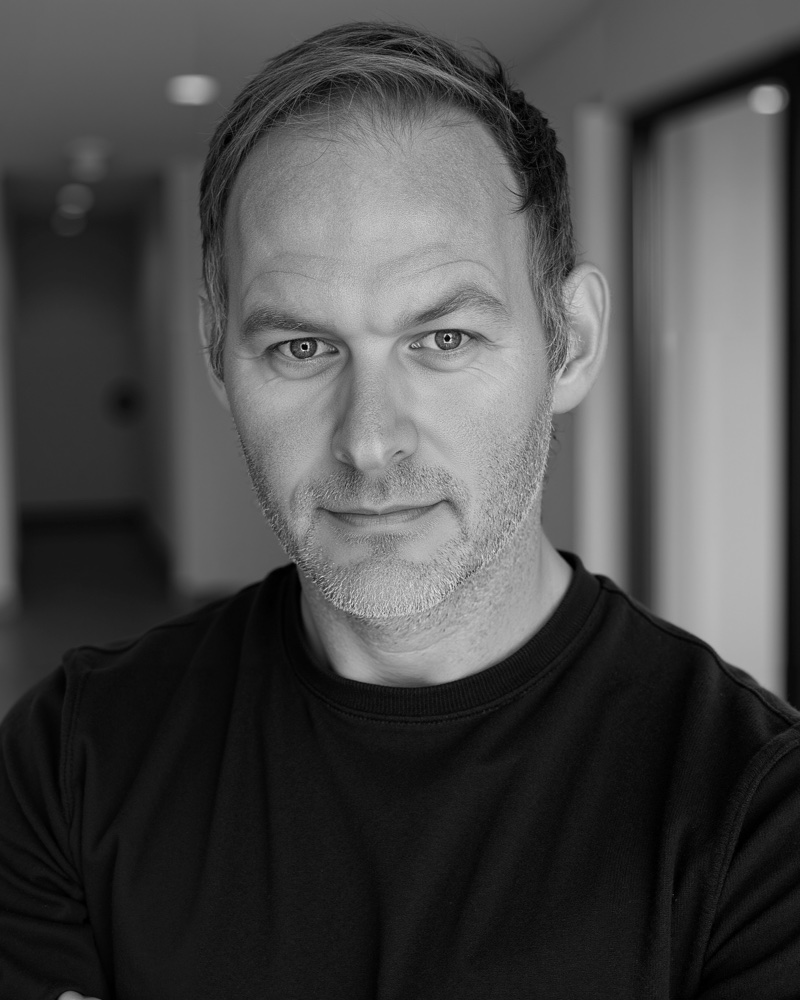
I'm Jayson Robinson, founder of Polyviam. Over the last decade I've led growth and marketing strategy for B2B companies including BairesDev and Toptal — both US unicorns.

I started my career in Deloitte Digital and quickly moved into product management. Since then I've worked at a combination of startups, scale-ups, and enterprise, giving me appreciation of the different challenges and opportunities facing each type. I've taught over 500 product managers, marketers, and founders, and coached dozens of CEOs, founders, and execs.

I now spend my time roughly equally between doing (building and growing my own businesses) and helping others do the same, all heavily focused on AI.

Based in London, UK. Occasionally with clients at their offices.

№ 08: Begin
08: Begin

Discuss how we can get your team AI-fluent.

A 30 minute call where we can ask some questions about your goals and current state.